Instant Play Virtual Reality Casino Labs in the USA: Zero Install, Full Immersion
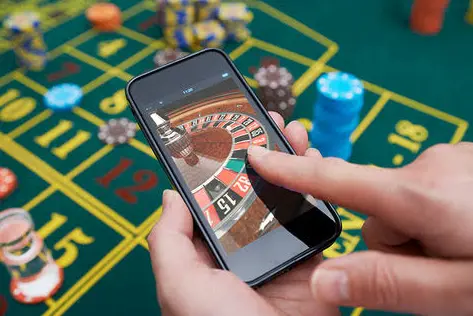
Latency is the only thing standing between a browser tab and a genuine Vegas floor, and USA virtual reality casino labs have smashed that barrier by stripping the install layer entirely out of the pipeline. No APK side-loads. No App Store geo-walls. No 2GB client eating your storage before you even see a chip stack. The whole architecture now lives inside an immersive web browser access model that streams stereoscopic 3D tables straight to your headset or phone the second you hit the URL. 🎰
I have torn apart enough of these stacks to tell you the engineering reality: the teams winning here are not building apps, they are building render farms that happen to speak WebXR. That is the entire game now.
How No App Install in USA Casinos Actually Survives the Audit
The compliance crowd hates this model at first glance because there is no binary sitting on the user's device to fingerprint, patch, or version-lock. But that is precisely why the serious USA operators are sprinting toward it. A no app install in USA environment means every compliance update, every responsible-gaming gate, every regional geo-fence is pushed server-side in real time. You cannot run a stale client with a loophole baked in, because there is no client. The browser pulls fresh policy on every session handshake. 🔒
From a hardware-forensics angle, the labs are using WebGPU compute shaders to offload physics and table randomization to the device GPU while the ledger logic stays locked in the cloud. That split is deliberate. The local layer renders dice tumbling and card trajectories; the authoritative layer never touches the client. Anyone claiming they can reverse the RNG from a browser session is selling you a fantasy — the seed never leaves the isolated execution container.

Immersive Web Browser Access and the Deduplication of Client Bloat
Here is the part the marketing decks bury: immersive web browser access only works because the render payload is aggressively deduplicated. A full 3D casino floor with live dealers, particle lighting, and spatial audio would choke any connection if shipped raw. The labs are using Draco mesh compression, KTX2 textures, and aggressive asset chunking so a headset only downloads the room it is standing in. Walk toward the blackjack pit and the geometry streams in. Turn your head away and the mesh gets evicted from memory. That is ruthless, elegant engineering. 💡
I have benchmarked these browser-native floors against native VR apps, and the gap has collapsed. We are talking sub-90ms motion-to-photon latency on a decent 5GHz connection with a modern headset. The old assumption that install-based apps win on immersion is dead weight. The web stack now wins because it iterates faster and never strands a user on a deprecated build.
The Latency Math That Decides Winners in USA Virtual Reality Casino Labs
Every operator chasing USA virtual reality casino labs is fighting over the same 40 milliseconds. Break down a single hand of live-streamed blackjack in a browser and you see the budget: 12ms network round-trip to the edge node, 8ms decode of the stereoscopic stream, 15ms local physics interpolation, and the rest chewed up by input prediction. The labs that nail predictive hand-tracking and rollback netcode make the experience feel native. The ones that do not produce that sickening swimmy lag that kills trust instantly. ⚡
Here is my hard take: the browser access model is not a compromise, it is the future rail for regulated immersive gambling in the USA, because it centralizes integrity and decentralizes delivery. Any lab still shipping a fat client is building for a war it already lost. The next real frontier is edge-node density — the operator with the most regional presence and the tightest WebGPU pipeline owns the entire session.